
Your Fleet Runs. Your Data Doesn't.
Thought Leadership · Fleet Intelligence · 6 min read
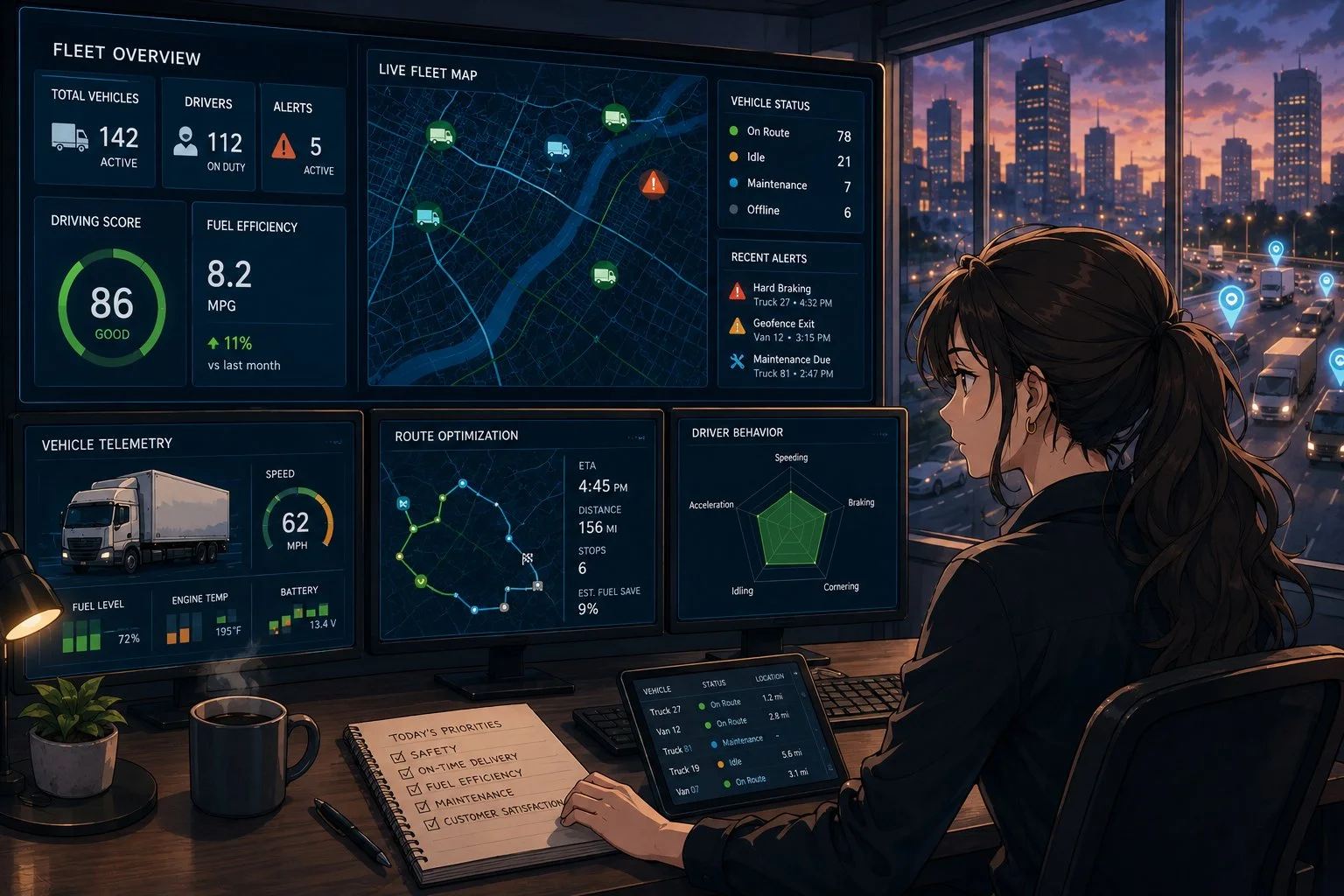
The average commercial fleet generates thousands of data points per vehicle per day, whether it’s speed, location, idle time, driver behavior, or fuel draw. Almost none of it gets acted on. That's not a technology problem. It's a visibility problem.
Here's a question worth noting: if you removed GPS tracking from your fleet operations tomorrow, how long would it take to notice? For most organizations, the honest answer is "not immediately." The gap between existing data and intelligence that drives decisions is exactly where operational costs hide.
““Fleet management used to mean knowing where vehicles are. Today it means knowing why your costs are what they are and having the leverage to change them.””
THE SHIFT
From tracking to intelligence
GPS tracking solved a logistics problem in the 1990s. Telematics solved a compliance problem in the 2000s. What fleet operators need now is a system that connects operational data across vehicles, drivers, assets, routes and surfaces the patterns that cost you money before they become reactive problems.
This is what separates a fleet management system and a fleet intelligence platform. One tells you where things are. The other tells you what's actually happening to your margins and why.
THE PLATFORM
What PowerFleet does differently
PowerFleet operates at the intersection of IoT, telematics, and AI-powered analytics. Rather than presenting raw data through dashboards, it surfaces operational insight across four dimensions that most fleets do not invest in:
Asset visibility Real-time tracking across vehicles, trailers, equipment, and containers; including assets that rarely move but cost significantly when they go missing or sit underutilized.
Driver risk profiling Behavioral patterns, from harsh braking, speeding, distraction, scored and trended over time. Coaching becomes targeted, and insurance exposure becomes measurable.
Cost surface mapping Idle time, fuel consumption, preventive maintenance windows, and route efficiency combined into a single operational cost view vs. siloed separate reports.
Compliance automation Hours of service, vehicle inspections, and maintenance records that are audit-ready without manual input. This reduces administrative overhead, while closing the liability gap.
THE HONEST PART
Technology isn't the hard part
Let’s be direct about something: most fleet intelligence implementations don't under deliver because the technology is wrong. They under deliver because the evaluation was incomplete. Organizations select platforms based on feature checklists without pressure-testing the questions that matter: What does this replace? Who owns the data? What does adoption actually require? How does this integrate with dispatch, finance, or HR systems that already exist?
These aren't vendor questions. They're strategy questions. And answering them before you select a platform is what separates a deployment that drives ROI from one that creates a new dashboard nobody checks.
“The right fleet intelligence platform is the one that gets used, which means it has to fit how your operations actually run, not how a demo assumes they do.”
HOW WE HELP
The Six Play approach
At Six Play Consulting, we work with organizations at the point where the technology decision gets real: before the contract is signed, while there's still room to get it right.
For fleet intelligence, that means:
Assessing your current operational data landscape; what's being captured, what's being acted on, and where the gaps are costing you money
Evaluating platforms including PowerFleet against your specific fleet profile, connectivity environment, and integration requirements
Challenging your assumptions about what IoT and telematics can realistically deliver in your operating context
Coordinating deployment and long-term optimization, not as a reseller, but as the advisor who helped you pick the right solution
Our goal isn't to sell you a platform. It's to make sure the platform you purchase changes your operational performance.
Is your fleet data working for you?
Fleet modernization that doesn't move the needle isn't modernization. If you're ready to close the gap between data and decisions, let's talk.